
J
Jeff Benjamin
Guest
Watch Out, Josh! Here Are Some Of The World’s Miler Legends’ World Record Predictions In 2026!
By Jeff Benjamin
Without a doubt, Josh Kerr’s World Record Mile Performance of 3 Minutes, 42.66 Seconds has sent shockwaves throughout the Sports World!
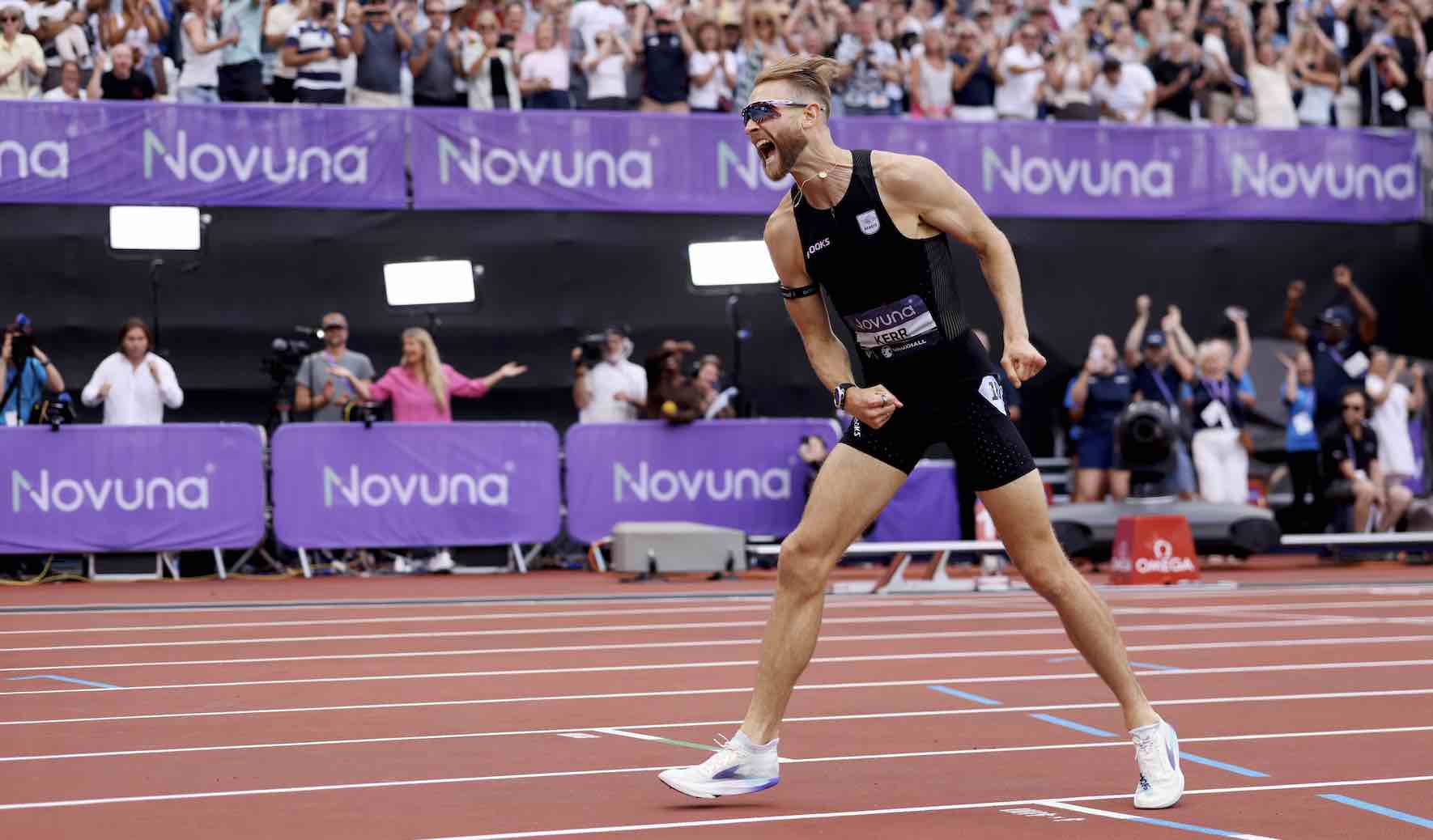
Josh Kerr breaks the 27-year-old record for the mile, photo by Getty Images for British Athletics
With this great achievement comes lots of chatter from all angles and facets of the Sport.
One thought-provoking question that entered this writer’s mind is: How would the Mile legends of the past fare today in the 2026 world of faster tracks, Super-Shoes, altitude tents, bi-carb, and all the other scientific methods used today?
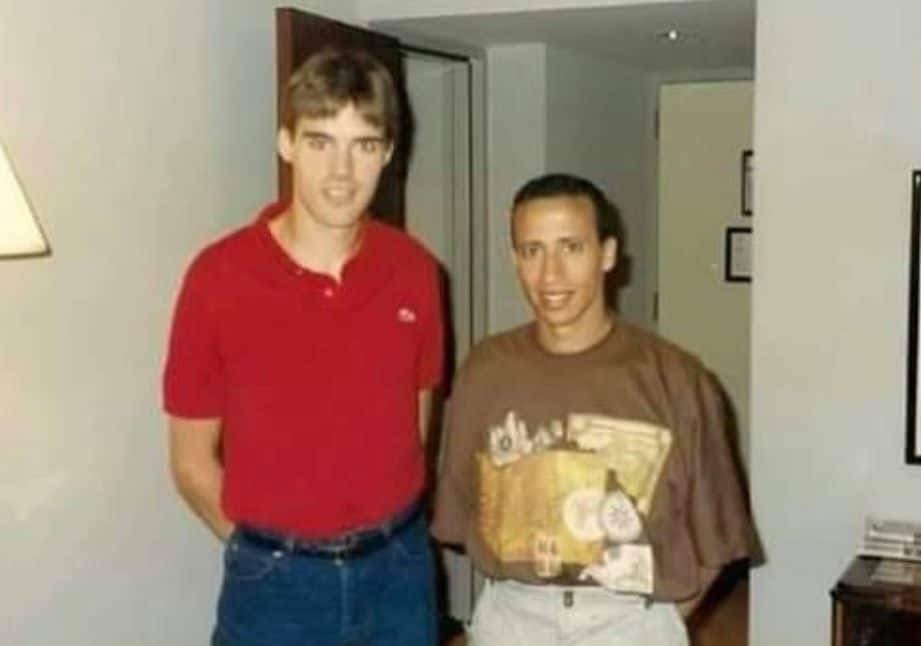
Said Aouita and the writer, Jeff Benjamin, a few light years ago…photo by Jeff Benjamin
Reaching out to many of these legends, one can sense their pride, grit, and admiration for what Kerr accomplished.
And while a few didn’t reply back (some out of respect for the new World Record), many of those who did definitely felt that they would be right in the mix with Kerr and the current crop of milers.
Whether by theorizing, guessing, or formulation (Steve Scott stressed the concept for him of one second faster per lap!), here’s what they predicted they could run the mile in the Athletics world of 2026!
Note – after their name in parentheses is their Mile PR, although some came to their conclusion using their best time over 1500 Meters.
Let the Games begin!
Said Aouita – (3:46.76) – “3:40.0”
Ray Flynn – (3:49.77) – “3:45.77”
Jim Spivey – (3:49.80) – “3:44.6”
Eamonn Coghlan – (3:49.78 WR Indoors) – “3:42.60”
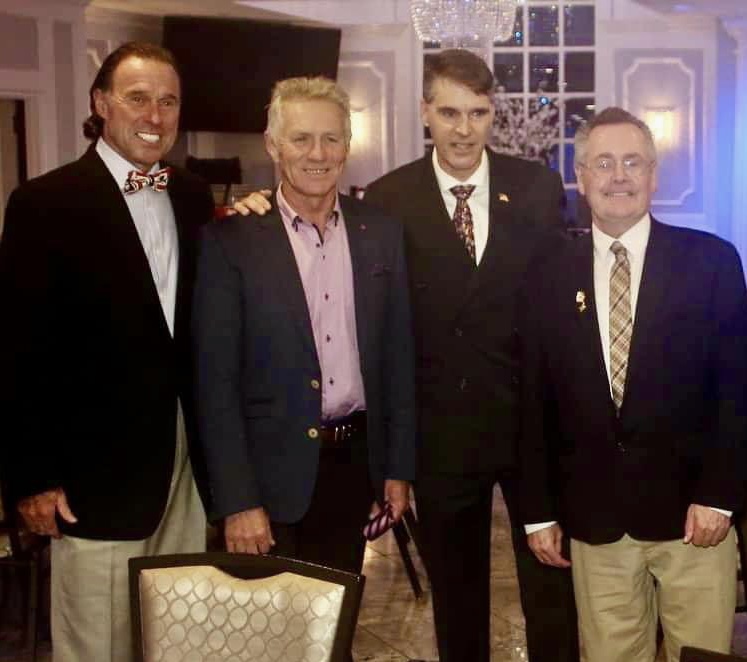
Rod Dixon
Eamonn Coghlan
Jeff Benjamin
Brit Olympic Steeplechaser Tony Staynings
Rod Dixon -(3:53.62) – “3:44.8”
Abdi Bile – (3:49.40) – “3:40.5”
Filbert Bayi – (3:51.0 WR) – “3:41.00”
Steve Scott – (3:47.69) – “3:43.69”
Ken Popejoy – (3:55.8) – “3:49.0”
Sebastian Coe – (3:47.33 WR) –
John Walker – (3:49.4 WR) – “3:43.0”
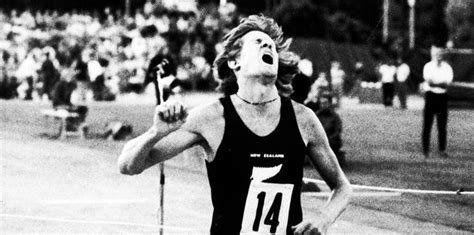
John Walker sets a new WR of 3:49.4, on 12 August 1975, in Goteborg, Sweden, photo courtesy of bringbackthemile.com
Tony Staynings – (4:01) – “3:57.0”
Finally – leave it to 1972 Olympic 800 Champion Dave Wottle – himself an NCAA Post-Graduate Scholar and 3:53.3 miler – to send a thorough and precise theorem as to how he would have fared in 2026!
“ I think it is very difficult to compare one era with another, but I’ll take a poke at it (for what it’s worth).
Here are the changes that have occurred (or at least most of them) that I’ve noticed over the past 50-55 years since I competed.
– Longevity – track athletes, when I was running, did not have as many options to continue running following their college years. My last year of competitive running was 1973 when I was 23 years old. Most of the best runners now hit their peak in their mid-to-late 20s…with notable exceptions, of course. Most runners in my era probably did not have the opportunity to achieve their peak physical performance during their career.
– Track surfaces and shoes – I was talking with Edwin Moses a few years back, and he said he believes (given his background in engineering) that the new track surfaces and shoes with carbon plates combined may account for 1.6 – 1.7 seconds per lap in improvement. That may be overly optimistic, but if it’s true, or even close to being true, that’s a huge advantage.
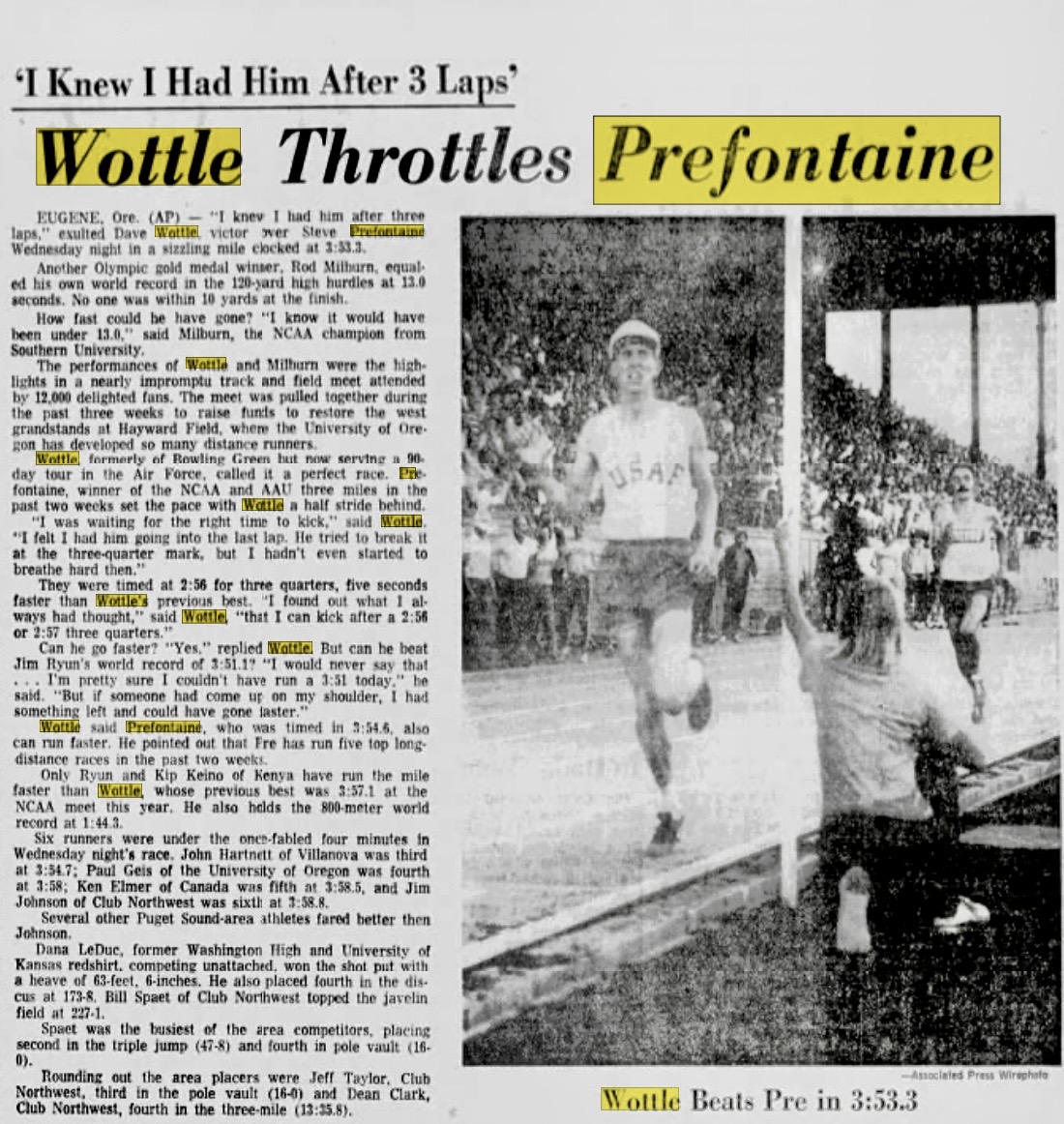
Dave Wottle outkicks Steve Prefontaine over the mile, from newspaper clipping
– Support – Shoe companies’ financial support allows athletes to stick with running much longer without having to be employed. The support allows the athletes to have the best shoes, facilities, gear, physical therapy, coaching, diet, research, etc. They can commit their lives to becoming the best they can be without the distractions of a job while enjoying financial security. And they can have the opportunity to train alongside fellow runners of similar ability, pushing one another to be their best.
– Changing strategy for the mile – I was fortunate to run in the mile against Filbert Bayi in June of 1973 in Helsinki when, for the first or second time, he revealed his strategy of going out very quickly in the first 800 meters of the 1500 meter race, to the tune of 1:52- 1:53. Back then, most miles were run in such a way that we would come through around 3:00 minutes and then kick. That strategy was not conducive to producing the kind of times runners are producing today. Bayi changed the way miles were to be run, and runners nowadays are reaping the benefits with much faster times.
– More opportunities to compete against the best competitors – When I was running, being on an athletic scholarship meant my first priority was to the Bowling Green team. With the college meet schedule, it left fewer opportunities to compete in select meets like the Millrose
Games and the Olympic Invitational. I would run a select race on a Friday night and then fly back to Ohio to run in a college meet on Saturday. Back then, the opportunities to run against the best runners in the country were pretty much confined to the NCAA and AAU Championship meets and a few invitational meets. We had nothing like what the Diamond League offers runners today. Iron sharpens iron.
You need to run against the best to become the best.
– Use of rabbits and pacer lights in races– In my era, rabbits were very seldom used, pacer lights never. Since the addition of rabbits in races, races have become more focused on having great times and less tactical than in years past. Using rabbits pushes runners to run faster more often and, as a result, see more improvement over time.
As I said, iron sharpens iron.
– Science – Developments in recovery and sports medicine as well as nutrition may give current athletes an advantage, not markedly so, but still an advantage over what we had available 50 years ago.
The question you ask, Jeff, is a good one, and I have been asked this question and thought about it over the years.
Of course, no one will ever be able to prove what I say is true or not; it’s all subjective. And when I think about how to answer it, I also have to keep my ego in
check, which is something that is sometimes hard to do for a competitive athlete.
But here I go.
Given the fact that my 3:53.3 mile I ran against Prefontaine at Hayward Field in
June of ’73 made me the third fastest miler of all time behind Jim Ryun’s 3:51.1 world record and Kip Keino’s 3:52.8, and considering all of the points stated above, I believe I would be competitive with the top milers today.
But let me answer your million-dollar question in two ways.
First, I believe if you just picked me up at my peak at 23 years old and dropped me in a race with current milers, my fastest time,
given all the advantages listed above, would be in the 3:49 to 3:50 range.
However, second, if you consider a scenario where I was born in 2002 and had all the advantages that the current milers have had all their lives, I believe I would be running more in the 3:45 to 3:46 range.
That may be way too optimistic, and it may be my ego gone amok, but there you go. My estimate is also dictated by my belief that runners today have not evolved into more superhuman beings than we were, as much as they have been given more advantages than we had 50+ years ago.
I guess the bottom line is I believe an athlete who is one of the best in the world in one era will, if given the advances that have occurred since that era, be one of the best in the world in the next era. And one also needs to take into account that the competitive spirit, drive, and desire of someone to be the best at something cannot be quantified.
Personally, I give God the glory for the generous gift He gave me to run swiftly during my time on the track, whatever the time.”
The debate will always continue, and hopefully 20 years from now we can ask Josh Kerr the same question!!
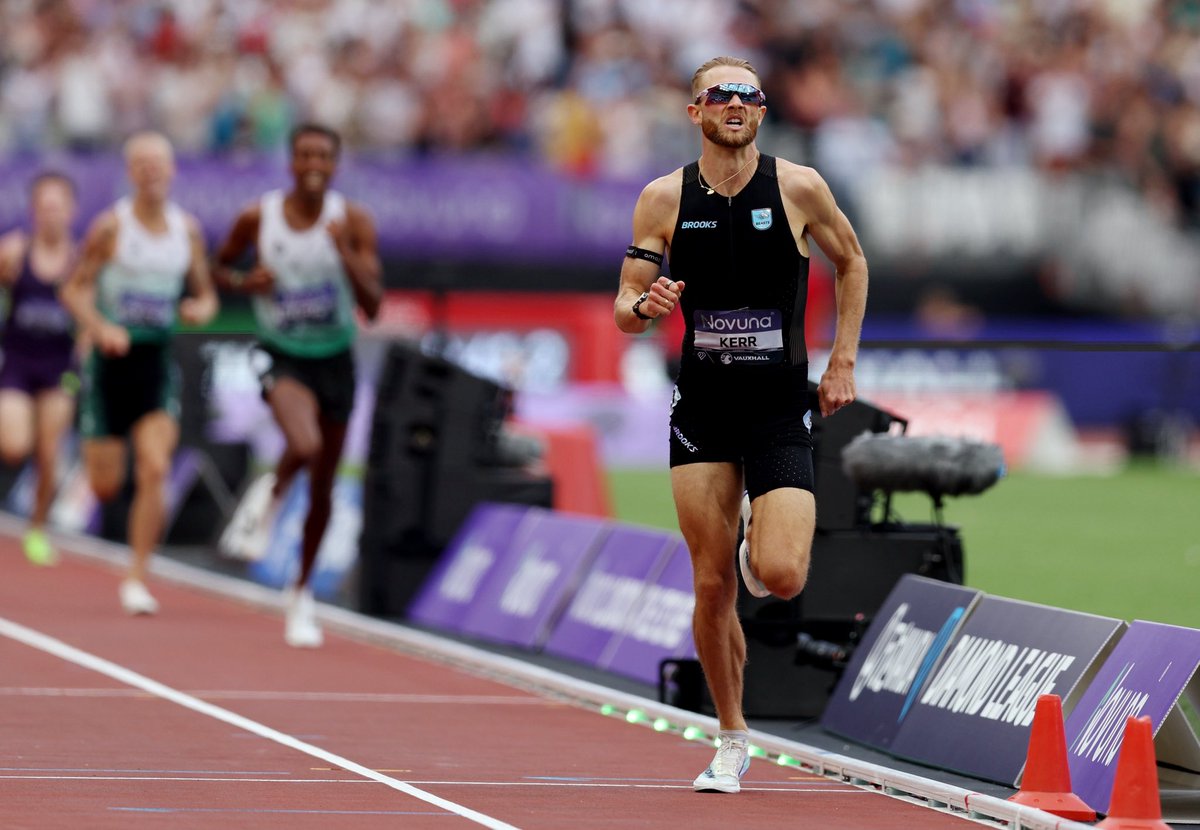
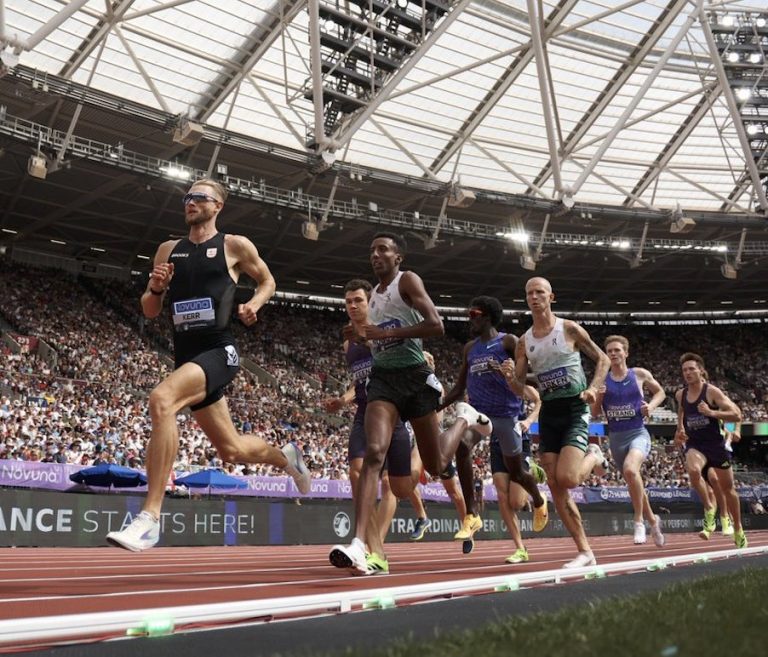
Josh Kerr, en route to his WR 3:42.66 mile, July 18, 2026, photo by Getty Images for British Athletics